Operations Over People & Night Flying
Since April 2021, Part 107 allows flight over non-participating people through four categories: Cat 1 (under 0.55 lb, no exposed lacerating parts), Cat 2 (injury severity under 11 ft-lb, declared and labeled), Cat 3 (under 25 ft-lb, with location restrictions), and Cat 4 (airworthiness certificate). Night flight needs no waiver — current training plus a 3-statute-mile anti-collision light. The details in this lesson come straight from subparts C and D of Part 107, with the numbers the exam tests.
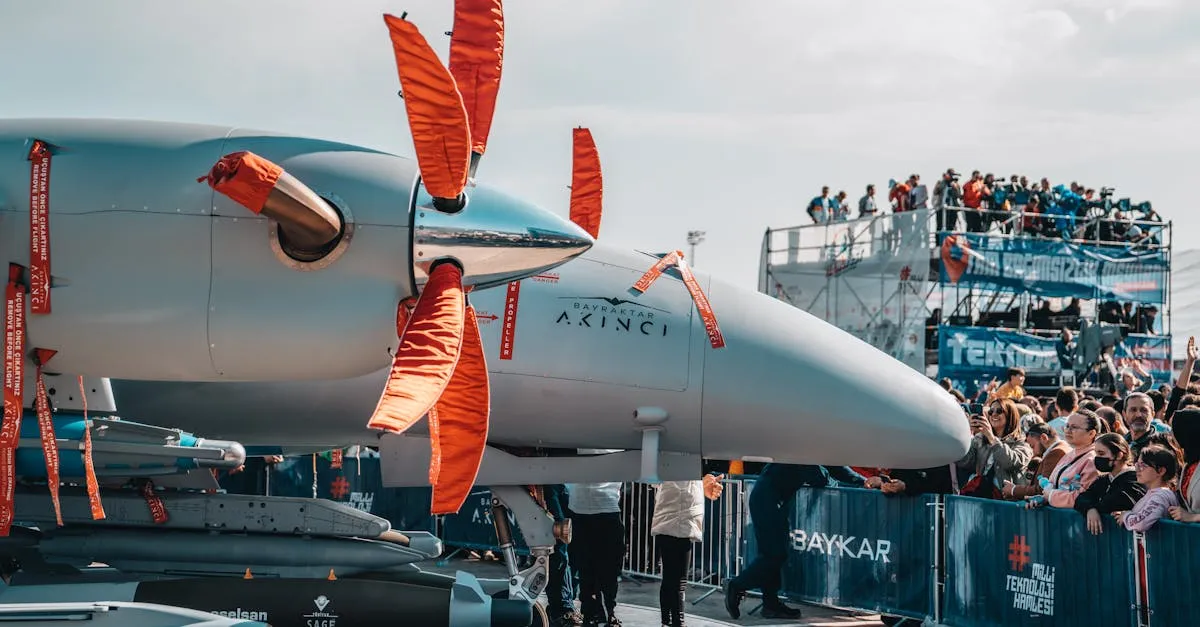
Flying Over People: The Four Categories
The base prohibition (§107.39): no operating over a human being unless they’re directly participating, under a covered structure or inside a stationary vehicle — or the flight qualifies under one of four categories (§107.105).
Category 1 (§107.110)
- The aircraft weighs 0.55 lb (250 g) or less on takeoff and throughout the operation, everything included
- No exposed rotating parts that would lacerate human skin on impact
- No declaration of compliance, no FAA paperwork — the weight and the prop guards do the work
- Sustained flight over open-air assemblies is allowed only if the aircraft also complies with Remote ID (§§89.110 or 89.115(a))
Category 2 (§§107.115, 107.120)
The aircraft must be designed/produced/modified so that it:
- Will not cause injury equivalent to or greater than a transfer of 11 foot-pounds of kinetic energy upon impact
- Has no exposed rotating parts that would lacerate skin
- Has no safety defects
Then it must be listed on an FAA-accepted declaration of compliance (the producer’s document) and labeled as Cat 2 eligible. Same open-air assembly condition as Cat 1: sustained flight over assemblies requires RID compliance.
Category 3 (§§107.125, 107.130)
- Injury threshold raised to 25 foot-pounds of kinetic energy — same no-exposed-parts and no-defects conditions
- DoC-listed and labeled like Cat 2
- Never over open-air assemblies of human beings — outright prohibition
- Flight above any person is allowed only if:
- The operation stays within or over a closed- or restricted-access site with everyone on notice, or
- There is no sustained flight over anyone unless they’re directly participating or protected by a cover/stationary vehicle
Category 4 (§107.140)
- The aircraft holds an airworthiness certificate under Part 21 (a real certification pathway)
- The remote PIC operates within all the limitations in the approved Flight Manual — and those limitations must permit operations over people
- RID-compliant Cat 4 aircraft may sustain flight over open-air assemblies
The category numbers track the paperwork: 1 = none, 2 and 3 = declaration + label, 4 = airworthiness certificate. And remember Cat 1’s hidden condition — it carries throughout the operation, so a 249-gram drone with a heavy battery that pushes it over 250 g at takeoff is no longer Category 1.
If a Cat 2 or Cat 3 label is damaged, destroyed, or missing, the remote PIC must re-label the aircraft — legible, prominent, durable for the operation — before conducting any operations over people. The label is a operating requirement, not decoration.
Picking a Category: Worked Examples
- A 249-gram Mini-class drone with prop guards, filming a downtown festival crowd: Category 1 — under 0.55 lb at takeoff and no exposed lacerating parts. Sustained flight over the open-air assembly additionally requires RID compliance.
- The same drone with a heavier battery installed that brings takeoff weight to 260 g: no longer Category 1 — now it needs Category 2/3 eligibility (a DoC from the producer) or it cannot overfly non-participants at all.
- A 900-gram camera drone whose producer filed a Cat 2 declaration: Category 2 over people generally, since its impact severity is under 11 ft-lb and it’s DoC-listed and labeled.
- A heavy-lift platform with no declaration: no category applies — overflight of non-participants requires a §107.39 waiver, or the mission gets replanned around where people aren’t.
One hardware note the categories share: “no exposed rotating parts that would lacerate human skin” is a design-and-production fact, not a promise — prop guards meeting the criteria in the accepted declaration are what make many Cat 2 aircraft eligible. Fly the configuration the declaration covers; guards off is a different aircraft in the FAA’s eyes.
Night Operations (§107.29) — Post-2021 Rules
Night flying under Part 107 requires no waiver, two conditions:
- The remote PIC has completed the initial knowledge test or recurrent training after April 6, 2021 (the night-content curricula)
- The aircraft has anti-collision lighting visible for at least 3 statute miles, with a flash rate sufficient to avoid collision — dimmable for safety, never extinguishable
What Counts as Night?
- Day: sunrise to sunset
- Civil twilight: 30 minutes before sunrise / 30 minutes after sunset (Alaska uses the Air Almanac)
- Night: everything else
Civil twilight needs only the 3-SM light. Night adds the training requirement.
Remote ID: The Over-People Connection
The categories interact with Remote ID (14 CFR Part 89) more than most courses teach: sustained flight over open-air assemblies — the toughest crowd — is only permitted for aircraft that also meet §89.110 (standard RID) or §89.115(a) (broadcast module), in Categories 1, 2, and 4. Cat 3 can’t overfly assemblies at all.
Your drone broadcasts, per §89.305: identity (the aircraft’s serial number or a session ID — not your registration number), the control station’s position and altitude, the aircraft’s position, altitude, and velocity, a UTC time mark, and an emergency status flag. Compliance: standard RID built in, a broadcast module (take-off-location broadcasts, VLOS-only), or a FRIA.
Waivers (§§107.200–107.205)
Part 107 allows applying for a Certificate of Waiver from specific regulations. The complete waivable list (§107.205) is worth knowing because the exam tests what’s NOT on it:
| Waivable | Section |
|---|---|
| Operation from a moving vehicle | §107.25 (never for compensated property transport) |
| Anti-collision lighting for night/civil twilight | §107.29(a)(2), (b) — note: the training requirement is not waivable, only the light |
| Visual line of sight (BVLOS) | §107.31 |
| Visual observer | §107.33 |
| Multiple aircraft | §107.35 |
| Yielding the right of way | §107.37(a) — technically waivable, rarely granted |
| Operations over people | §107.39 |
| Airspace authorization | §107.41 |
| Operating limitations (altitude, speed, weather) | §107.51 |
Not on the list — never waivable: careless/reckless operation (§107.23), hazardous-material carriage (§107.36), preflight duties (§107.49), and PIC responsibility itself (§107.19).
Waiver Application Process
- Apply through FAADroneZone
- Submit a safety case: the risk, and your mitigations for it
- FAA review — weeks to months
- If approved: carry the waiver, obey every condition and limitation on its face
The classic question: “Which of these can never be waived?” Know the shape of the list — operating rules yes, responsibility and airworthiness no. And the night nuance: you can waive the anti-collision light, but there is no waiver that substitutes for night training.
Key Facts to Walk In With
ACS references: I.E.K1–K17
- Cat 1: ≤0.55 lb throughout + no exposed lacerating parts; no paperwork
- Cat 2: < 11 ft-lb injury severity + no exposed parts + no defects; DoC + label
- Cat 3: < 25 ft-lb; never over open-air assemblies; closed-site or no-sustained-flight rule
- Cat 4: airworthiness certificate + Flight Manual limitations
- Label replacement duty (§107.135)
- Sustained over assemblies = RID required (Cats 1, 2, 4); Cat 3 prohibited
- Night: training + 3-SM light; the light is waivable, the training is not
- §107.205 list: what’s waivable; §107.19/23/36/49 never
Quick Check
Q: What is the weight limit for Category 1 operations over people? A: 0.55 lb (250 g) or less at takeoff and throughout the operation.
Q: What are Category 2’s injury and equipment thresholds? A: Injury no worse than 11 ft-lb of kinetic energy transfer, no exposed lacerating rotating parts, no safety defects — plus FAA-accepted DoC and label.
Q: What’s the Category 3 restriction over people? A: Never over open-air assemblies; over any person only in closed/restricted-access sites with notice, or without sustained flight over non-participants.
Q: What must your drone have for night operations? A: Anti-collision light visible 3 SM with a sufficient flash rate — plus the PIC’s post-April-2021 training. No waiver needed.
Q: Can the FAA waive the requirement to complete night training? A: No — §107.205 waives the anti-collision lighting requirement only.
Q: Can a Category 2 drone maintain sustained flight over an open-air assembly? A: Only if it also complies with Remote ID (standard RID or a broadcast module). Otherwise no.
What’s Next?
Regulations covered. Now let’s look at what happens when things go wrong: accident reporting and recordkeeping requirements.
This free course covers the essential knowledge, but if you want video walkthroughs, practice exams, and instructor support, Pilot Institute’s Part 107 course is the most comprehensive option available.