Remote PIC Responsibilities
The remote Pilot in Command is “directly responsible for and is the final authority as to the operation” (§107.19(b)) — a sentence that answers half the responsibility questions on the exam. The PIC can delegate tasks (someone else may manipulate the controls under direct supervision, §107.12) but never responsibility, may deviate from any rule in a genuine in-flight emergency (§107.21), and must produce their certificate on demand to the FAA, NTSB, law enforcement, or TSA (§107.7).
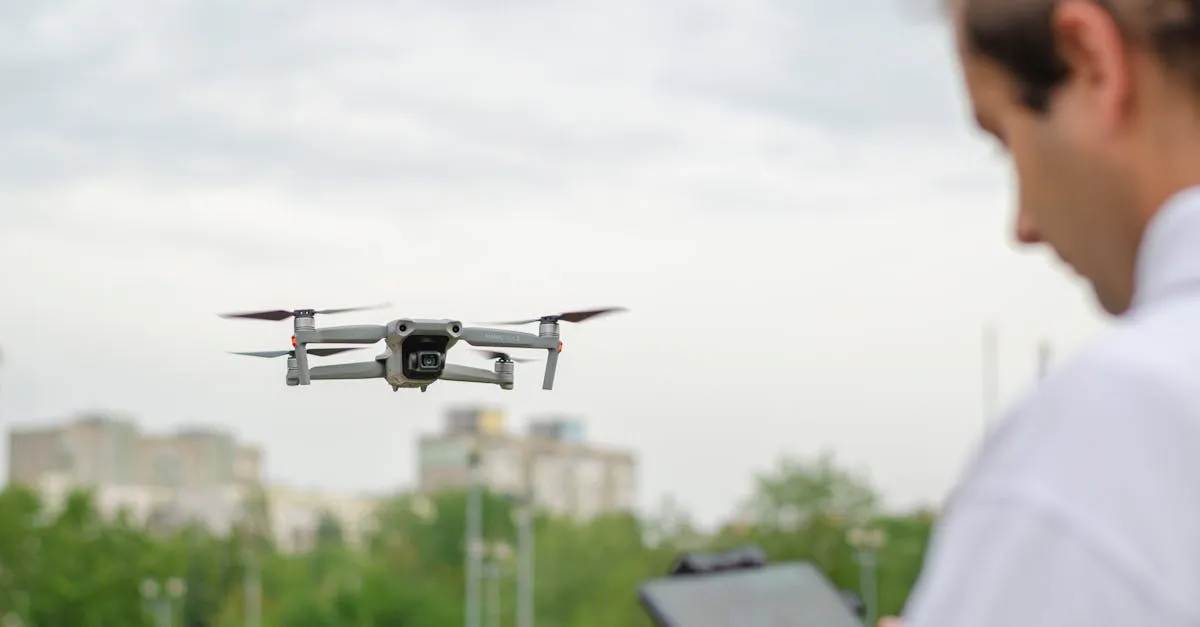
The Definitions Behind the Roles (§107.3)
Two §107.3 definitions carry exam weight:
- Small unmanned aircraft: an aircraft under 55 pounds, “including everything that is on board or otherwise attached to the aircraft” — batteries, props, and your payload all count toward the limit
- Visual observer: “a person who is designated by the remote pilot in command to assist the remote pilot in command and the person manipulating the flight controls… to see and avoid other air traffic or objects aloft or on the ground” — a scanning role the PIC assigns, not a certificate
The Remote PIC Is In Charge
The rule, §107.19 in full:
- (a) A remote PIC must be designated before or during the flight
- (b) The PIC is directly responsible and is the final authority over the operation
- (c) The PIC must ensure the aircraft “will pose no undue hazard” to people, aircraft, or property in the event of a loss of control — the crash-safe design expectation
- (d) The PIC must ensure the operation complies with all applicable regulations
- (e) The PIC must have the ability to direct the small unmanned aircraft to ensure compliance
Key principle: the PIC can delegate tasks but not responsibility. Someone else may fly; the PIC answers for everything.
Who Can Be the PIC?
The PIC must hold a current Remote Pilot Certificate (24-calendar-month currency, §107.65) and be in a physical and mental condition to operate safely (§107.27’s alcohol and drug provisions apply — more below).
Crew Roles
Remote PIC
- Ultimate authority and responsibility
- Ensures regulatory compliance and crew briefing
- May simultaneously manipulate the controls
Person Manipulating the Controls (§107.12)
- The person actually flying
- Does NOT need their own certificate — if under the direct supervision of a certificated remote PIC who has the ability to take control of the aircraft
- The regulation’s own structure: §107.12(a)(2) allows uncertificated manipulation when supervised; §107.19(e) keeps the PIC on the hook
A person without a Remote Pilot Certificate CAN manipulate the controls, but only under a certificated PIC’s direct supervision with the PIC positioned and able to take over. The free-flight version — “here, you try it” from across the field — is a violation charged to the PIC.
Visual Observer (§107.3, §107.33)
- Defined as a person “designated by the remote pilot in command” to assist in seeing and avoiding traffic and obstacles
- Optional, but when used: effective communication at all times, and the PIC must ensure the VO can actually see the aircraft per §107.31
Transferring Command
Because §107.19(a) lets the PIC be designated before or during the flight, command can transfer mid-operation — the standard practice is a face-to-face briefing: aircraft state, controls handed, who is PIC from this moment, and both certificates current. In flight-team operations, the transfer is complete when the receiving pilot acknowledges and takes the controls.
In-Flight Emergencies (§107.21)
The rule most courses skip, in two sentences:
- (a) “In an in-flight emergency requiring immediate action, the remote pilot in command may deviate from any rule of this part to the extent necessary to meet that emergency.”
- (b) Each PIC who deviates must, upon request of the Administrator, send a written report of that deviation
Translation: if the choice is break a rule or crash into a crowd, break the rule — and expect to write it up if the FAA asks. Note what the rule does NOT say: no pre-approval, no radio call required, and the report obligation is triggered by the FAA’s request, not automatic.
The classic scenario: a drone’s control link fails over a road, and the PIC flies above 400 ft to clear a building and reach a safe recovery point. Legal? Under §107.21(a), yes — an emergency deviation to the extent necessary. The wrong answers are always “no deviation is ever allowed” and “deviation is allowed only with prior ATC approval.”
Preflight Responsibilities (§107.49)
Before any flight, the PIC must — this is the regulation, not advice:
- Assess the operating environment: local weather, local airspace and restrictions, location of people and property, other ground hazards
- Brief all direct participants: operating conditions, emergency procedures, contingency procedures, roles and responsibilities, potential hazards
- Verify control links work properly
- Ensure enough power for the intended operational time
- Ensure any carried object is secure and doesn’t adversely affect flight characteristics or controllability
- For subpart D operations, ensure the aircraft meets the applicable category requirements
Alcohol and Drugs (§107.27, §§91.17/91.19)
Part 107 incorporates the manned-world limits for the PIC, the manipulator, and visual observers:
- 8 hours from bottle to throttle — no operating within 8 hours of consuming alcohol
- 0.04% blood alcohol concentration — cannot act as PIC/PMC/VO at or above this level
- No drugs that affect faculties contrary to safety
- Refusing a test or furnishing results when required leads to certificate action (§§107.57, 107.59)
“8 hours bottle to throttle, 0.04% BAC” — and note it binds the VO too. The FAA’s limit is half the typical state driving limit.
Federal, State, and Local Rules
Part 107 is the federal baseline. On top of it:
- State laws — privacy, surveillance, and law-enforcement use restrictions vary by state
- Local ordinances — cities and counties may regulate takeoff and landing locations (park bans are common)
- TFRs — federal restrictions that can appear any day, any hour
Federal aviation regulations preempt local attempts to regulate the airspace itself. But local governments retain authority over where you launch and land — so “the FAA says I can fly here” doesn’t unlock a city park that bans takeoffs.
The Crash-Safe Expectation (§107.19(c) in Practice)
Section 107.19(c) is easy to skim past and worth slowing down on: the PIC must ensure the aircraft “will pose no undue hazard to other people, other aircraft, or other property in the event of a loss of control for any reason.” Not “if you fly carefully” — in the event. The rule asks you to plan for the failure, not just avoid causing it.
In practice that means walking the failure paths before launch, exactly like the contingency planning in the preflight lesson:
- Where does it go when the battery dies at minute 18? Every flight over people or property has a worst-case drift footprint; the PIC’s job is knowing where it lands when nothing works
- What’s between you and the recovery point? A loss-of-link climb on the far side of a crowd, rising through the arrival corridor of a nearby helicopter route, is a §107.19(c) failure you designed in
- Who catches it? Nobody — an aircraft in distress lands where it lands; the PIC’s duty was arranging for “where it lands” to be empty
This is also the sentence the FAA reaches for when a flight ends in a fence, a car roof, or a near miss: the question isn’t whether you were careful, it’s whether the consequences of failure were acceptable before you launched.
Key Facts to Walk In With
ACS references: I.B.K2–K5, K8, K10–K11; I.A.K3–K5
- PIC: final authority, designated before or during flight (§107.19(a),(b))
- Loss-of-control hazard duty (§107.19(c)); compliance duty (d); ability to direct (e)
- PMC: no certificate needed under direct supervision (§107.12)
- VO: designated by PIC, optional, communication required (§§107.3, 107.33)
- Emergency deviation allowed; written report on FAA request (§107.21)
- §107.49 preflight list: environment, briefing, links, power, cargo, category
- 8 hr / 0.04% / VO included (§107.27)
- Certificate producible to FAA, NTSB, law enforcement, TSA (§107.7)
Quick Check
Q: Can someone without a Remote Pilot Certificate fly the drone? A: Yes — as the person manipulating the controls, under the direct supervision of a certificated PIC who can take over (§107.12).
Q: Who is ultimately responsible for a drone operation? A: The remote PIC, always. Responsibility cannot be delegated.
Q: Your drone starts descending toward a crowd after a motor failure. You climb through the 400-ft ceiling to reach a safe landing zone. Legal? A: Yes — §107.21(a) permits deviation from any rule to the extent necessary in an in-flight emergency; a written report is required only if the FAA asks.
Q: Who can demand to see your Remote Pilot Certificate? A: The FAA Administrator, an authorized NTSB representative, any federal/state/local law enforcement officer, or an authorized TSA representative (§107.7(a)(2)).
Q: What are the alcohol limits for a visual observer? A: Same as the PIC: no operating within 8 hours of drinking and no 0.04% BAC or higher (§107.27).
What’s Next?
Now let’s look at two specialized areas: operations over people and night flying. Both are recent additions to Part 107 that the FAA increasingly tests.
This free course covers the essential knowledge, but if you want video walkthroughs, practice exams, and instructor support, Pilot Institute’s Part 107 course is the most comprehensive option available.