Weight, Balance & Loading
Why Weight Matters
Every drone has a Maximum Takeoff Weight (MTOW). Under Part 107, the absolute limit is 55 lbs. Your specific drone may have a lower manufacturer limit.
Effects of Weight on Performance
- Heavier aircraft = longer takeoff distance, reduced climb rate, slower acceleration, shorter endurance
- Lighter aircraft = shorter takeoff, better climb, faster response, longer flight time
The FAA tests the relationship between weight and performance. Heavier always means worse performance in every category.
Center of Gravity (CG)
The center of gravity is the point where the drone would balance if you suspended it from a string. CG position directly affects stability and control.
- CG too far forward: drone is nose-heavy, may struggle to maintain altitude, sluggish response
- CG too far aft: drone is tail-heavy, unstable, may oscillate or become uncontrollable
- CG within limits: stable, predictable flight
Adding a heavy camera or sensor shifts the CG. Always check balance after adding payloads. Most consumer drones are designed to handle their integrated cameras within the CG range.
Weight and Balance Calculations
The FAA doesn’t expect complex calculations for drone pilots, but you should understand the basics:
- Empty weight = the drone itself without payload or batteries
- Useful load = maximum weight minus empty weight. This is what you can carry (batteries, camera, sensors).
- Maximum takeoff weight = the limit you cannot exceed at liftoff
Example
- Drone empty weight: 1.5 lbs
- Battery: 0.5 lbs
- Camera: 0.3 lbs
- Total: 2.3 lbs (well under 55 lbs, fine for Part 107)
Performance Charts
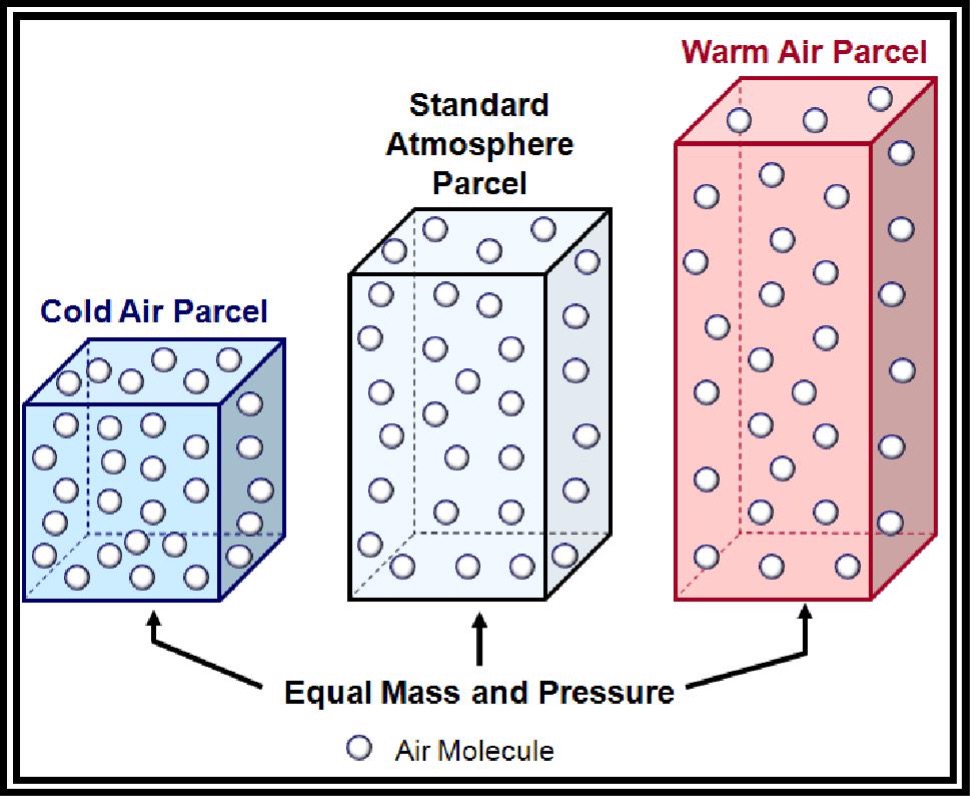
Drone pilots don’t use performance charts the way airplane pilots do, but the concepts still apply. Higher density altitude means reduced performance. Higher weight means reduced performance. Combine both and the impact compounds.
Practical Impact on Drones
| Condition | Effect |
|---|
| Hot day + high altitude + full payload | Shortest flight time, sluggish response | | Cool day + sea level + no payload | Longest flight time, best performance | | Hot day + sea level | Moderate impact | | Cold day + high altitude | Mixed (cold = denser air, but altitude = thinner air) |
Weight Changes During Flight
Unlike fuel-burning aircraft that get lighter during flight, drones don’t change weight significantly during operation. Battery drain reduces weight by grams, not pounds.
If your drone carries and releases a payload during flight (crop dusting, seed dropping), the weight change mid-flight can affect CG.
Quick Check
Q: What happens to performance as weight increases? A: Takeoff distance increases, climb rate decreases, endurance decreases.
Q: What is center of gravity? A: The point where the aircraft would balance if suspended.
Q: What is useful load? A: Maximum takeoff weight minus empty weight. The weight available for batteries, payload, and accessories.
What’s Next?
Now let’s look at specific performance metrics: takeoff distance, climb rate, and endurance, plus how environmental conditions affect them.
This free course covers the essential knowledge, but if you want video walkthroughs, practice exams, and instructor support, Pilot Institute’s Part 107 course is the most comprehensive option available.