What Is FPV Flying?
Why It Matters
You’ve seen the videos. A drone tears through an abandoned warehouse at 80 mph, dives off a cliff face, weaves through trees inches from branches. That’s not a DJI Mavic. That’s FPV. And it looks impossible.
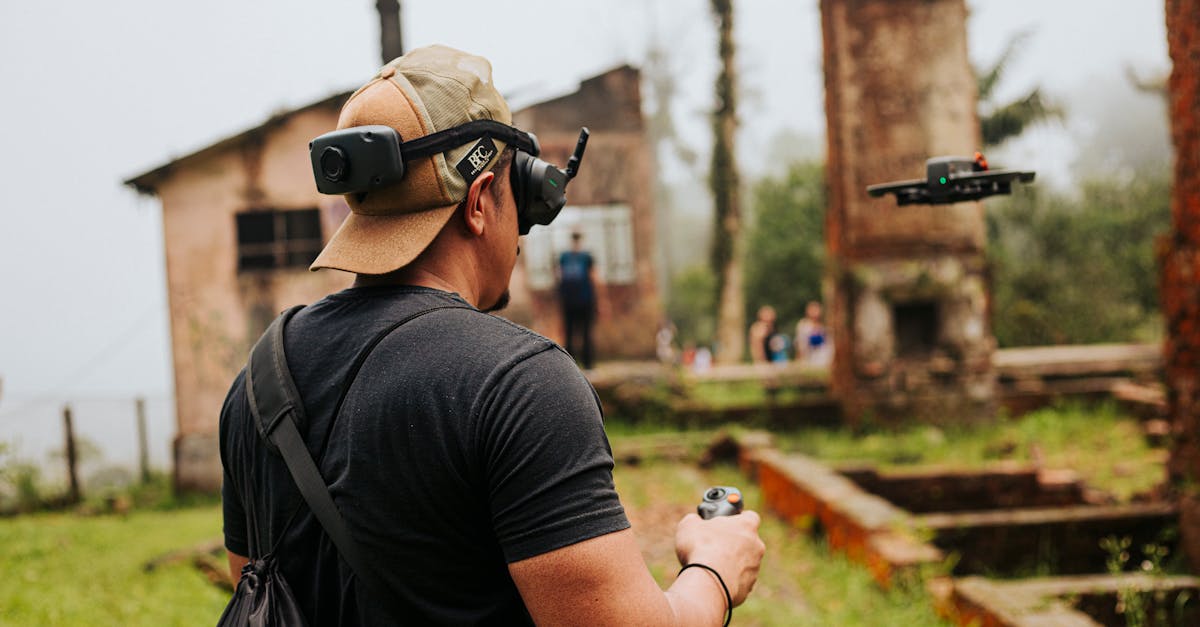
FPV stands for first-person view. The drone sends a live video feed to goggles you wear on your face. You see exactly what the drone sees, in real time, with almost zero delay. You’re not watching a screen from the ground. You are the pilot sitting in the cockpit.
The difference between flying a camera drone and flying FPV is the difference between playing a video game and riding a motorcycle. One is safe, stable, and predictable. The other is fast, physical, and demands real skill.
How FPV Differs from Camera Drones
No GPS, No Self-Leveling
Camera drones like the DJI Mavic series use GPS and barometers to hold position automatically. Let go of the sticks and the drone hovers in place. FPV drones in Acro mode (the standard flying mode) have none of that. Let go of the sticks and the drone keeps going or falls. You are the stability system.
Analog or Digital Video Link
Camera drones send HD video over a digital Wi-Fi or Occusync link to your phone or controller screen. FPV drones use either analog video (SD resolution, near-zero latency, static increases as range grows) or digital video (DJI HD, Walksnail, HDZero: higher resolution with slightly more latency).
The trade-off is always latency vs quality. FPV pilots prioritize seeing what’s happening right now over seeing it in high definition. A 50ms delay at 80 mph means your drone has traveled nearly 6 feet before you see what happened.
Manual and Acrobatic
FPV drones can fly through gaps no camera drone would attempt, race at speeds over 100 mph, flip, roll, and dive. The skill of the pilot is the only limit. The drone executes exactly what your thumbs command, instantly.
Analog vs Digital FPV
Analog Video
The traditional FPV system. Your drone’s camera sends a standard-definition signal (typically 480p-600TVL) via a video transmitter (VTX) on the 5.8 GHz band to your goggles. Analog video has approximately 0.2 seconds of latency, basically none.
As you fly farther away, the picture gets snowy and static-filled, but you can still fly by it. Many pilots describe analog as “flying through a snow globe” at range. It degrades gracefully rather than cutting out suddenly.
Popular analog goggle brands include Fat Shark and Skyzone. Budget analog goggles start around $100.
Digital Video
Newer systems from DJI (DJI FPV Goggles), Walksnail, and HDZero deliver HD video to your goggles. The picture is much clearer, but latency is higher: roughly 0.5 seconds on the DJI system. That half-second is noticeable during fast maneuvers but manageable for most freestyle and cinematic flying.
Digital systems tend to either work perfectly or cut out entirely (digital cliff), unlike analog’s gradual degradation. They’re also more expensive.
Which Should You Start With?
Both options work. Analog is cheaper and has a massive used market. Digital looks much better. Many pilots eventually own both, and some analog goggles accept modular digital receivers that let you switch systems without buying new goggles.
What FPV Can Do That Camera Drones Can’t
- Fly through tight spaces: warehouses, tunnels, under bridges
- Dive at high speed: cliff dives, building descents
- Proximity freestyle: weaving through trees, under structures, inches from obstacles
- Cinematic follow shots: tracking cars, bikes, or athletes at speed with dynamic camera angles
- Racing: competitive FPV racing is a growing sport worldwide
Common Beginner Questions
What’s the range? Range is usually limited by your battery, not your radio or video signal. A typical 5-inch FPV quad can fly 2+ km on a fresh battery, though you should check local regulations since range limits vary by country.
How long does it fly? Depending on battery capacity, drone weight, and how aggressively you fly, flight times range from 2 minutes (hard freestyle on a 5-inch) to 20 minutes (cruising gently on a long-range build).
How much does it cost to start? A complete beginner setup (controller + simulator) starts around $100-150. A full ready-to-fly FPV drone with goggles runs $200-500 for a micro whoop or $800-1500 for a 5-inch setup with quality goggles.
Is it legal? Yes, FPV flying is legal in most places under existing drone regulations. In the US, you need a visual line of sight (VLOS) or a spotter watching the drone while you wear goggles. We cover regulations in detail later in this course.
Quick Check
Q: What does FPV stand for? A: First-person view. The drone sends live video to goggles you wear.
Q: What happens when you let go of the sticks on an FPV drone in Acro mode? A: The drone continues on its current path. There’s no GPS or self-leveling to hold position.
Q: What’s the main trade-off between analog and digital FPV systems? A: Latency vs image quality. Analog has near-zero latency but SD resolution; digital has HD resolution but slightly higher latency.
What’s Next?
Now that you understand what FPV is, let’s figure out which drone to buy first: from indoor micro whoops to cinematic DJI FPV systems.