Operations Over People: The Updated Rules
For years, flying over people was completely banned. The 2021 rule change created four categories — here's exactly which one applies to your drone.

The 2021 FAA rule replaced the blanket ban on flying over people with four categories based on drone weight, energy potential, and safety features. Category 1 allows sub-250g drones with no exposed lacerating parts, while Categories 2-3 require manufacturer Declarations of Compliance. Category 3 drones can never fly over open-air assemblies; the other categories can sustain flight over assemblies only when Remote ID compliant.
For years, flying over people was completely prohibited under Part 107. The 2021 rule change transformed a blanket ban into a tiered system — but understanding exactly what’s allowed requires digging into four distinct categories.
The Old Rule vs. The New Rule
Under the original 2016 Part 107 regulations, any flight over a non-participating person was a violation. No exceptions, no gradations. The only path forward was a waiver under Section 107.200, requiring demonstration of equivalent safety. Few pilots went this route. Fewer succeeded.
The 2021 final rule created four categories that allow operations over people, each with different requirements based on the risk posed by the drone. Smaller, lighter drones with protective features face fewer hurdles.
One critical exception: Category 3 aircraft can never operate over open-air assemblies. Categories 1, 2, and 4 may maintain sustained flight over an open-air assembly only if the drone meets Remote ID requirements — otherwise you’re limited to a brief transit that isn’t sustained flight, or you need a §107.39 waiver.
The Four Categories Explained
Category 1 — Small Drones (Under 250g)
The most accessible tier. Your drone must weigh 0.55 lbs (250g) or less at takeoff — including payload — and stay at or under that weight throughout the operation. No exposed rotating parts that could lacerate skin — prop guards are your friend here.
No FAA-accepted Declaration of Compliance needed. If your drone meets weight and exposed-parts requirements, you’re generally good.
The DJI Mini series is the most common Category 1 candidate, with a catch: exposed propellers fail the no-lacerating-parts test, and heavy prop guards can nudge a 249g airframe over the weight line. Category 1 requires both boxes ticked at takeoff.
Category 2 — Controlled Descent
Focuses on the energy a drone could deliver in a worst case. The drone must not cause injury greater than 11 foot-pounds (15 joules) of kinetic energy if it strikes a person.
You don’t calculate this yourself. The manufacturer submits a Declaration of Compliance (DOC) to the FAA demonstrating the aircraft meets this threshold. Your job: verify your drone model has an accepted DOC.
Remote ID required.
Category 3 — Controlled Access Areas
Category 3 raises the injury threshold: the drone must not cause injury equivalent to or greater than 25 foot-pounds of kinetic energy transfer on impact, proven the same way as Category 2 — through an FAA-accepted Declaration of Compliance and a manufacturer’s label on the aircraft.
Where you can fly is the real difference. A Category 3 operation over people must fit one of two paths: either everyone underneath is inside a closed- or restricted-access site and has been put on notice that drones are flying, or the flight never maintains sustained flight over anyone who isn’t directly participating.
Remote ID required. Category 3 aircraft can never fly over open-air assemblies, no exceptions within the category.
Category 4 — Heavier Drones with Airworthiness
The most complex tier. Category 4 requires an airworthiness certificate issued under 14 CFR Part 21 — a completely different mechanism from the Declarations of Compliance used for Categories 2 and 3. The remote pilot must operate within all the limitations laid out in the FAA-approved Flight Manual for that aircraft.
This is the domain of purpose-built commercial drones. If you’re flying a consumer or prosumer drone, Category 4 almost certainly doesn’t apply.
What This Means in Practice
Most Part 107 pilots operate under Category 1:
- Sub-250g drone with no exposed lacerating parts (typically prop guards) → Category 1
- Heavier drone (Air 3S, Mavic series) → in practice, none of the categories. These drones weigh far too much for Category 1, and DJI hasn’t put consumer models through a Category 2 Declaration of Compliance, so check the FAA’s accepted DoC list before assuming anything.
The FAA maintains a public list of drones with accepted DOCs. Check this list before conducting any operation over people. The FAA list is the authoritative source.
Even when your drone qualifies, professional judgment matters. Legal doesn’t always mean wise. Minimize overflight time, maintain altitude where possible, and have emergency procedures ready.
Open-Air Assemblies — The Special Case
Open-air assemblies include concerts, sporting events, parades, festivals, protests — any outdoor gathering where people are concentrated.
The rules split by category here. Sustained flight over an open-air assembly is flatly prohibited for Category 3 aircraft. For Categories 1, 2, and 4, sustained flight over an assembly is allowed only when the operation meets Remote ID requirements — a brief, one-time transit that isn’t sustained flight is treated differently. Anything beyond that requires a §107.39 waiver with rigorous safety mitigations.
Remote ID Connection
Since September 2023, all drones registered under Part 107 must meet Remote ID requirements. The broadcast carries the drone’s identity, location, altitude, and velocity, plus the control-station location (Standard Remote ID) or the take-off location (broadcast module).
Categories 2, 3, and 4 explicitly require Remote ID. Category 1 drones also need it under Part 107. The only Remote ID exception is for sub-250g recreational drones — which has nothing to do with commercial Part 107 operations.
Ensure Remote ID is functioning before takeoff. A failure mid-flight creates a regulatory violation and may affect your category eligibility.
Frequently Asked Questions
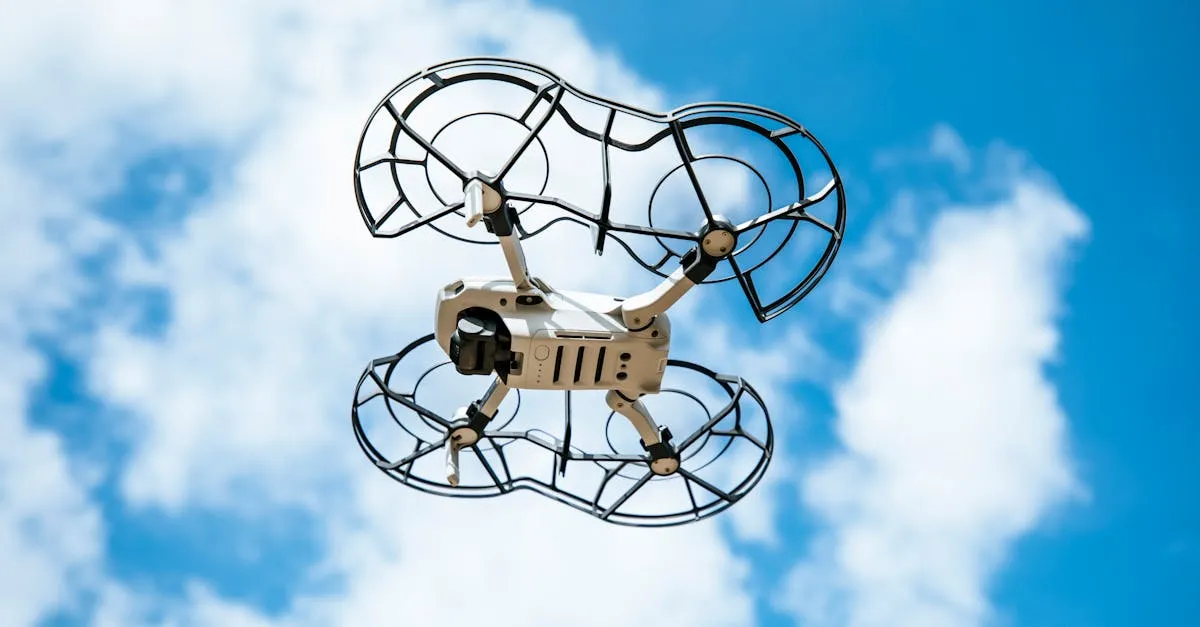
Does my DJI Mini qualify for Category 1? It’s a squeeze. DJI Minis weigh just under 250g, but exposed propellers don’t meet the no-exposed-lacerating-parts requirement, and adding prop guards can push the takeoff weight over 250g — Category 1 requires both at once. Keep the aircraft at or under 250g with guards fitted (lightweight guards, no accessories) or accept that it can’t legally fly over people.
What is a Declaration of Compliance (DOC)? Documentation submitted by manufacturers to the FAA demonstrating a drone meets the injury-severity thresholds — 11 foot-pounds for Category 2, 25 foot-pounds for Category 3. Pilots must verify their drone has an accepted DOC.
Can I fly over an outdoor concert using any category? Not with a Category 3 aircraft — those can never fly over open-air assemblies. Categories 1, 2, and 4 can sustain flight over an assembly only when the drone meets Remote ID requirements; anything beyond that requires a specific FAA waiver with rigorous safety mitigations.
Is Remote ID required for all operations over people? Yes. Categories 2-4 explicitly require it, and Category 1 drones also need it under Part 107 rules. The only Remote ID exception is for sub-250g recreational drones, which does not apply to commercial operations.
How do I verify if my drone has an accepted DOC? The FAA maintains a public list of drones with accepted Declarations of Compliance. Check this list before conducting any operation over people to confirm your specific model qualifies.
What happens if I violate operations over people rules? Civil penalties are adjusted annually for inflation and run to five figures per violation, and criminal prosecution is possible for willful violations. The FAA takes unauthorized operations over people seriously due to safety risks to people on the ground.
Understanding operations over people is essential for serious Part 107 pilots. Our free Part 107 Course covers everything for the exam. Deep dive with Operating Rules and Operations Over People.