Night Drone Flying Rules: Updated for 2026
Night flying used to require a waiver. The rules changed in 2021 — here's exactly what's legal, what's required, and how to get stunning night footage.
Night drone flying is now legal under Part 107 without a waiver. You need anti-collision lighting visible for 3 statute miles with a flash rate sufficient to avoid collision, plus currency on the training that covers night operations.
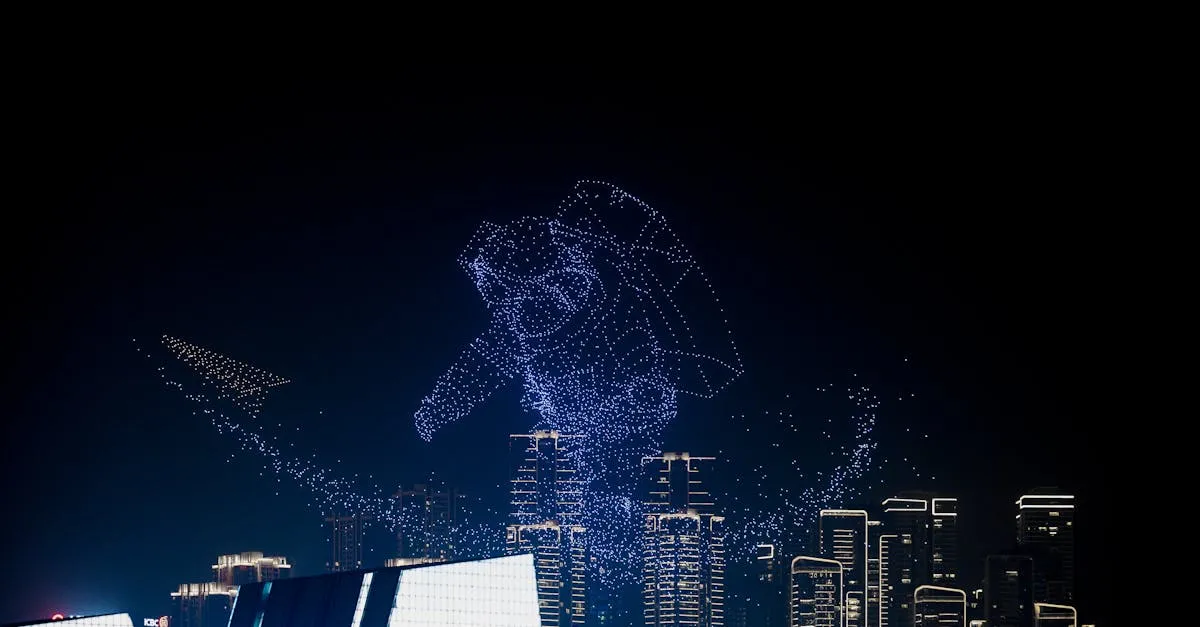
Night drone flights produce stunning footage — city lights, star trails, moonlit landscapes. But flying after dark comes with specific FAA rules that have evolved significantly. Here’s what’s legal in 2026.
Can You Fly a Drone at Night Under Part 107?
YES. As of the 2021 Operations Over People rule update, night flying is allowed under Part 107 without a waiver.
Previously, any commercial night flight required a waiver under §107.29 — detailed safety documentation and weeks or months of FAA review. Those days are over.
As long as you meet the current requirements, you can legally fly at night under your standard Part 107 certificate. No waiver needed.
Two key requirements:
- Your drone must have anti-collision lighting visible for 3 statute miles
- You must have completed an updated Part 107 knowledge test or recurrent training covering nighttime operations
The remote pilot certificate itself never expires — what expires is your operating currency, and you keep it by completing the FAA’s free online recurrent training every 24 calendar months. Since April 2021, that recurrent training includes the night-operations content, so any pilot current on it is night-qualified.
Bottom line: current Part 107 + proper anti-collision lights = cleared for night flight.
The Anti-Collision Light Requirement
The FAA doesn’t just say “put a light on your drone.” They have precise requirements.
Visibility distance: Must be visible for at least 3 statute miles. Not 1 mile. Not “bright enough from your position.” Three statute miles. Non-negotiable.
Flash pattern: Must have a flash rate sufficient to avoid collision — a steady, unblinking beam doesn’t qualify. The flash distinguishes your drone from other light sources.
Color: The regulation sets no color requirement — visibility and flash rate are what count. In practice most compliant 3-mile strobes are red or white; choose whichever stands out best against your backdrop, and skip decorative multi-color light shows.
Mounting: Visible from all directions. A single top-mounted light might not be visible from below. Some pilots use multiple lights positioned around the aircraft.
Built-in drone lights: Many DJI models have built-in lights. These may or may NOT meet the 3-mile requirement. Check your model’s specs — don’t assume compliance. A light visible from 100 feet doesn’t help when the FAA asks about 3 miles.
Aftermarket strobes: Products like the Firehouse ARC strobe are specifically designed for the 3-mile requirement. Minimal cost compared to regulatory risk.
Additional Night Flying Requirements
Visual observers: Recommended but not required. Given reduced visibility, a VO is smart even when not legally mandated.
Visual line of sight: You must maintain VLOS — significantly harder at night. Your anti-collision light becomes the primary tracking tool. If you lose sight of that flash, you’ve lost VLOS. Regulatory violation.
Reduced visibility is natural: Don’t push the limits of what you can barely see. If you’re straining, you’re probably too far.
All standard Part 107 rules still apply: Night adds requirements — it doesn’t remove existing ones. 400 feet AGL max, airspace authorization in controlled airspace, no flying over moving vehicles without meeting criteria.
Recreational Night Flying
Recreational pilots can also fly at night, following community-based organization (CBO) guidelines and having passed the TRUST test.
Anti-collision lights are strongly recommended and may be required by your CBO. Even without a mandate, operating an unlit drone at night is unsafe and attracts unwanted attention.
Under 250g drones have more relaxed rules, but lights are still smart. An invisible drone creates problems for everyone.
Tips for Better Night Drone Footage
- Manual camera settings — auto mode fails at night
- ISO 100-800 — keep as low as possible to reduce noise
- Shutter speed 1/30 - 1/60 — longer for more light, watch for motion blur
- Shoot RAW — maximum editing flexibility for night work
- Avoid autofocus — struggles in low light. Manual focus or tap-to-focus on light sources
- Plan your flight path — obstacles are harder to see at night
- Fly conservative patterns — slower speed, wider turns
Safety Considerations
- Battery performance drops in cold night air. Plan 20-30% less flight time. Keep spares warm.
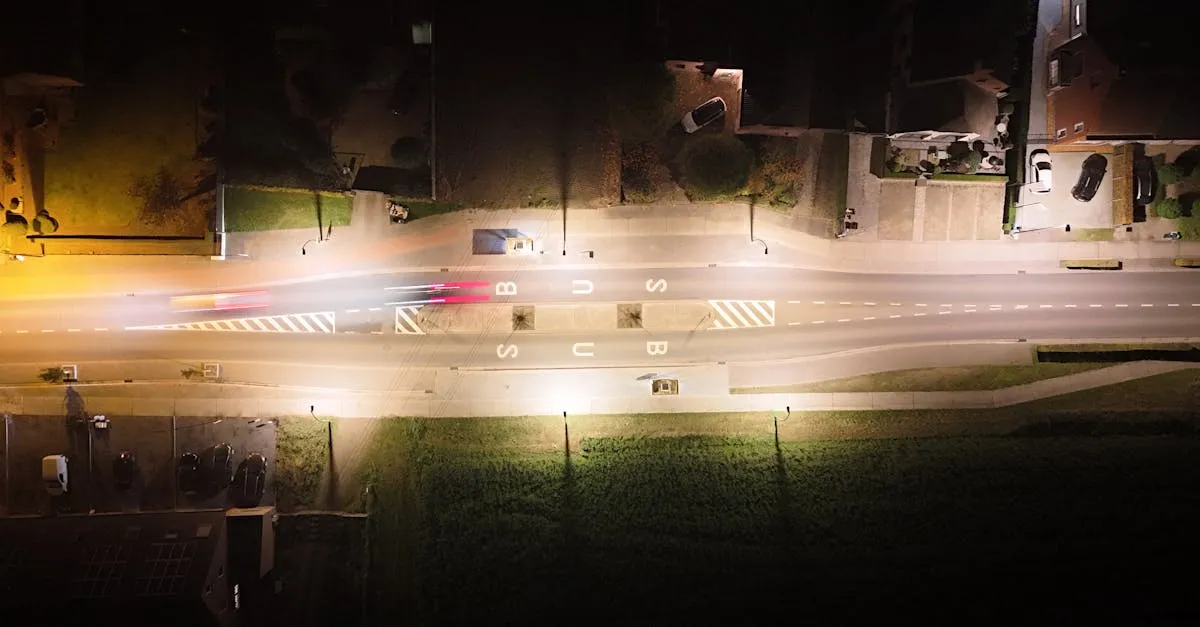
- Obstacles are nearly invisible — power lines, trees, buildings all disappear into darkness
- RTH altitude — set ABOVE any nearby obstacles. RTH flies a straight line back
- Fly slower — reduced visibility means reduced reaction time
- Scout during daylight — walk the area, identify obstacles, plan your flights
- Bring a visual observer — dedicated eyes on the drone significantly improves safety
Frequently Asked Questions
What requirements must anti-collision lights meet? Visible for at least 3 statute miles with a flash rate sufficient to avoid collision. No specific color is mandated. They should be visible from all directions. Built-in drone lights may not meet the 3-mile requirement.
Can recreational pilots fly drones at night? Yes, by following community-based organization guidelines and having passed the TRUST test. Anti-collision lights are strongly recommended and may be required depending on your CBO rules.
How should I adjust camera settings for night footage? Use manual mode. Keep ISO between 100-800 to minimize noise, set shutter speed to 1/30-1/60, shoot in RAW format, and avoid autofocus by using manual focus or tapping on light sources.
What safety precautions should I take? Scout locations during daylight to identify obstacles, set RTH altitude above nearby obstacles, fly slower due to reduced reaction time, and bring a visual observer. Battery performance drops in cold night air, so plan for 20-30% less flight time.
Do I need a waiver for commercial night operations? No. The 2021 rule change eliminated the waiver requirement. As long as you have proper anti-collision lighting and current certification with night operations training, you are cleared to fly commercially.
How do I maintain visual line of sight at night? Your anti-collision light becomes the primary tracking tool. If you lose sight of that flashing light, you have lost VLOS, which is a regulatory violation.
Our free Part 107 Course covers everything you need to pass, including night operations. For focused study, check out Operating Rules. Looking for a drone that excels in low light? The DJI Air 3S offers excellent night camera performance.