FPV Drones Explained: What Is FPV and Why Pilots Love It
Once you try FPV, standard drone flying feels like driving a minivan after riding a motorcycle. Here's what makes it so addictive.
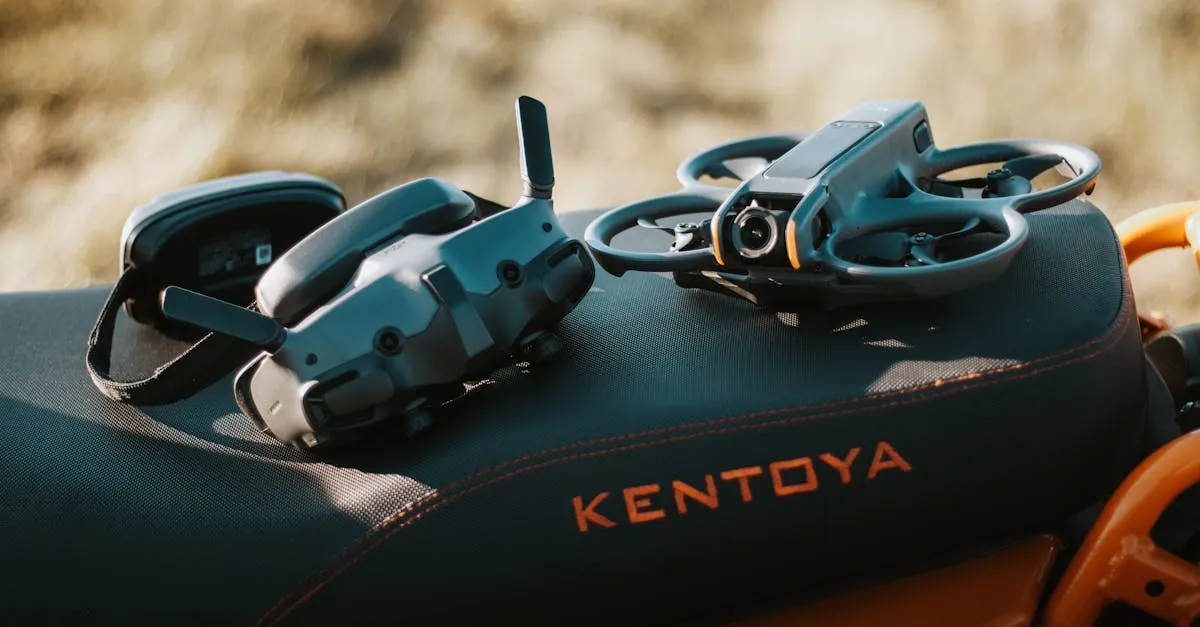
FPV (First Person View) lets pilots see what their drone’s camera sees through goggles, creating an immersive flying experience. Unlike standard drones with GPS and safety features, FPV flies in full manual Acro mode, offering unrestricted 3D freedom: flips, high-speed dives, and proximity flying that feels like actual flight.
You’ve seen the videos. A drone tears through a narrow warehouse gap, weaves between dense trees at 60 mph, and flies inches above a glass-like lake before pulling into a dizzying flip. That’s FPV. And once you try it, standard drone flying feels like driving a minivan after riding a motorcycle.
If you’ve been flying camera drones and feel like you’re hitting a creative ceiling, FPV is the sledgehammer you use to break through it.
What Is FPV?
FPV stands for First Person View. Instead of staring at a screen on your controller, you strap a pair of goggles to your face. Inside those goggles, you see exactly what the drone’s camera sees, in real-time, with incredibly low latency.
The drone becomes YOUR body. You aren’t looking up at a flying machine from the ground — you are IN the sky.
To compare: flying a standard drone is like operating a third-person camera on a stick. You’re a director standing far away, watching an actor perform. Flying FPV means you are flying. Your brain processes the visual information rushing through the goggles, and you react instinctively as if you’re physically soaring through the air.
It is, without exaggeration, the closest humans have come to unassisted flight. It feels like a superpower.
How FPV Differs from Standard Drone Flying
If you’re coming from a DJI Mavic, Air, or Mini series, you need to completely unlearn some deeply ingrained habits.
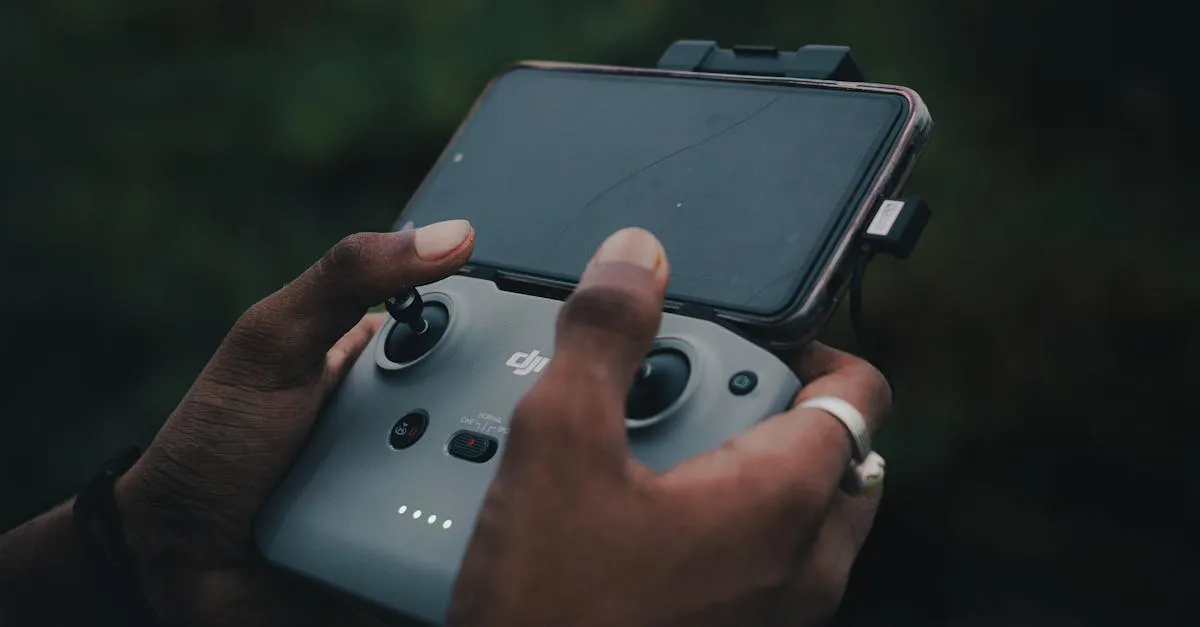
Most traditional FPV drones have no GPS hover. No downward obstacle avoidance. No intelligent flight modes, no “return to home” panic buttons, no safety nets. You’re flying in Acro mode (acrobatic) — full manual control.
The drone goes exactly where you tell it, and stays where you put it. Push the pitch stick forward and let go? It keeps flying forward. Roll to the side and let go? It stays rolled. If you completely let go of the sticks, the drone drops out of the sky like a rock.
Because of this raw nature, the learning curve is steep. Expect at least 40-50 hours in a simulator before your first real flight — many pilots log more. It’s challenging, frustrating, and physically demanding.
But the reward? Absolute, unrestricted freedom of movement in 3D space. Fly upside down, strafe sideways at full speed, dive straight down at 80 mph and pull out at the last second. No software-imposed flight restrictions — just the limits of your skill, reaction time, and bravery.
Three Types of FPV Flying
Once you learn to fly, the sky becomes a canvas. You choose how to express yourself.
Freestyle — The Parkour of the Sky
Tricks, flips, power loops, matty flips, bone-crunching dives. Expressive, creative, adrenaline-fueled. Freestyle pilots look at a landscape and see a playground. A tiny gap in a cliff face? Fly through it sideways. An abandoned factory? Split the doorway, grind the ceiling, dive out the broken window. Raw, unscripted, aggressive, and entirely about personal style.
Racing — Formula 1 in the Sky
Purely competitive. Speed, precision, lightning-fast reflexes. Pilots navigate courses lined with illuminated gates, flying through gaps just inches larger than the drone. Organized leagues like the Drone Racing League (DRL) and MultiGP have turned this into a legitimate spectator sport. Racing drones are built for sheer thrust, minimal drag, and durability.
Cinematic FPV — Where FPV Meets Hollywood
Smooth, buttery proximity flying for film, television, and commercial video. Think real estate tours that glide through the front door, up the staircase, and out a second-story window without cutting. Car commercials where the drone chases a vehicle through a tunnel, inches from the side mirror. Cinematic FPV trades aggressive flips for refined throttle control and impeccable camera angles — and it has revolutionized filmmaking.
Why Pilots Love FPV
The immersion is unmatched. Your heart rate spikes, your palms sweat, you get a natural adrenaline rush that no standard drone can replicate.
It’s a skill-based challenge. You aren’t relying on a computer chip and GPS to make you look good. When you nail a complex shot, it’s because YOU did it. Your thumbs made it happen.
Creative expression. Like a surfer picking a line on a wave, you develop YOUR style. Some pilots fly smooth and sweeping; others fly aggressive, snappy, and low to the ground. The drone becomes an extension of your personality.
The community. FPV pilots are passionate, slightly obsessive, and incredibly welcoming. We love talking about component builds, sharing tuning tips, and cheering on beginners who just landed their first successful battery.
Possibilities standard drones can’t touch. The angles, the speeds, the proximity to obstacles — there’s literally no other way to get these shots.
What You Need to Start
Don’t just buy a drone immediately. Here’s the order:
- FPV simulator (Liftoff or VelociDrone) — mandatory first step. Costs about $20. Saves hundreds in broken parts. Do not skip this.
- Radio controller — buy a good one upfront. You’ll use the same controller for sim and real flying.
- FPV goggles — analog (cheaper, fine for learning) or digital (more expensive, vastly better picture).
- Your first FPV drone — RTF (ready-to-fly) recommended for beginners. No soldering required.
Easiest entry point: The DJI Avata 2 bridges the gap between standard camera drones and full manual FPV. Self-sealing propellers, motion controller option, intuitive right out of the box. The perfect gateway into FPV.
Honest Expectations
Let me be straight with you:
- You WILL crash. A lot. Especially at first.
- Simulator time is non-negotiable. At least 40-50 hours before attempting a real flight. Skip it and you’ll destroy your drone on the first battery.
- First real flights will be shaky, nerve-wracking, and short. Your brain struggles to reconcile what your eyes see with what your body feels.
- Repairs are standard. You’ll learn to solder, swap burned-out motors, and buy extra props. It’s the cost of doing business.
But when it clicks — when your brain stops overthinking and your thumbs react on pure muscle memory, and you nail your first smooth power loop — it is absolutely addictive. The best feeling in the world. You’ll instantly forget about every crash that came before.
Frequently Asked Questions
How fast do FPV drones actually fly? FPV drones routinely hit 60-80 mph during freestyle and cinematic flights. Racing drones built for sheer thrust and minimal drag can push even higher speeds in competitive leagues like DRL.
What’s the difference between analog and digital FPV goggles? Analog goggles are cheaper and fine for learning. Digital goggles cost significantly more but deliver a vastly better picture. Start with analog and upgrade to digital later.
How much simulator time before flying real FPV? At least 40-50 hours in a simulator (Liftoff or VelociDrone) before your first real flight, and many pilots log more. Skipping this step will likely destroy your drone on the first battery.
Do you need to know how to solder to fly FPV? Not if you buy an RTF (ready-to-fly) model. However, repairs are standard in FPV, and you’ll eventually learn to solder, swap burned-out motors, and replace props.
Is the DJI Avata 2 considered true FPV? The Avata 2 is a bridge between standard camera drones and full manual FPV. It offers self-sealing propellers and a motion controller option, making it a gateway into FPV rather than a pure Acro mode experience.
What makes the DJI Avata 2 a good entry point? It bridges standard camera drones and full manual FPV with self-sealing propellers, a motion controller option, and intuitive controls out of the box.
Ready to experience the sky like never before? Learn the right way, from the ground up. Our free FPV Drone Flying Course takes you from zero to confident pilot, starting exactly where every pro did: in the safety of a simulator.