Density Altitude Explained for Drone Pilots
On a hot day in Phoenix, your drone thinks it's flying 2,000 feet higher than your GPS says. That's density altitude — and it directly affects performance.
On a hot day in Phoenix, your drone thinks it’s flying 2,000 feet higher than your GPS says. That’s density altitude — and it directly affects your drone’s performance, battery life, and safety.
What Is Density Altitude?
Think of density altitude as “the altitude the drone THINKS it’s at” based on air density.
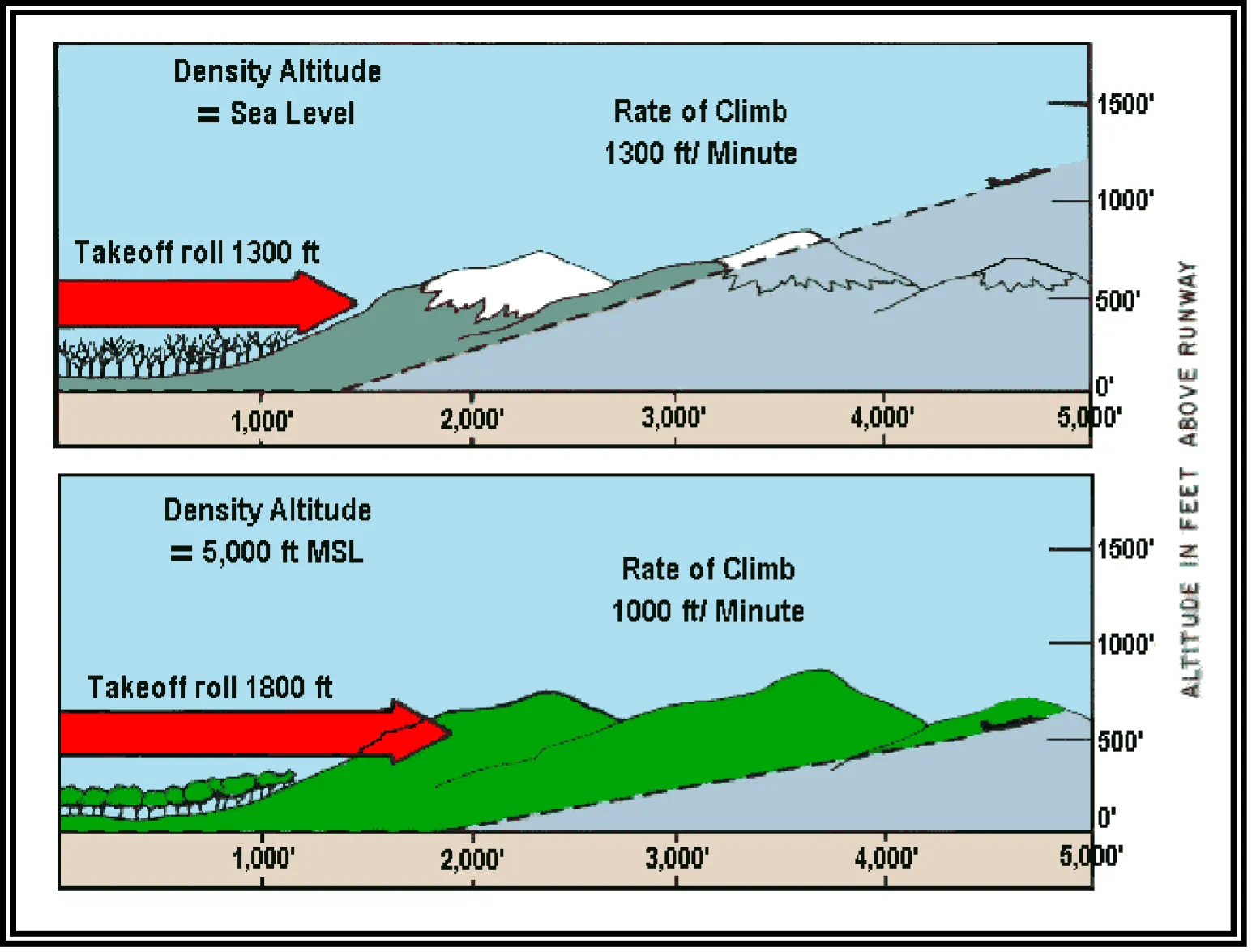
Your GPS might say you’re at 500 feet AGL. But if conditions create thin air, your drone experiences conditions equivalent to 2,500 feet. It performs as if it were at 2,500 feet, even though it’s physically much lower.
The key relationship:
- High density altitude = thin air = worse performance
- Low density altitude = dense air = better performance
“High density altitude” means less dense air — the density corresponds to what you’d find at a higher altitude. Counterintuitive but critical: high density altitude equals poor performance.
The Standard Day Baseline
Aviation uses a standard day as the baseline:
- Standard temperature: 15°C (59°F) at sea level
- Standard pressure: 29.92”Hg (1013.2 mb)
When conditions match these numbers at sea level, density altitude equals actual altitude. Any deviation changes density altitude and affects performance.
The Three Factors That Increase Density Altitude
1. High Temperature — The Biggest Factor
Hot air expands. Molecules spread apart, becoming less dense. Temperature is the most significant factor on a typical drone flight. On a hot summer day, density altitude can be thousands of feet higher than actual altitude.
2. High Altitude — Less Air Above You
At higher elevations, less atmosphere pushes down. Fewer air molecules per volume. Compare Denver (5,280 ft) to Miami (sea level) — even at identical temperatures, the Denver drone starts at a disadvantage.
3. High Humidity — Counterintuitive But True
Moist air is actually less dense than dry air. Water vapor (H₂O) has lower molecular weight than nitrogen and oxygen. When humidity increases, lighter water vapor displaces heavier molecules. Less dense air results. The effect is smaller than temperature or altitude but still contributes.
Low atmospheric pressure also decreases density — a passing low-pressure system increases density altitude even without temperature changes.
The Golden Rule
ANY combination of high temperature + high altitude + high humidity = HIGH density altitude = DECREASED performance
How Density Altitude Affects Your Drone
Reduced propeller efficiency: Less air to push per revolution. Props must spin faster for the same thrust.
Decreased lift capacity: Less thrust means less lift. Heavy payloads may be grounded.
Shorter flight times: Motors draw more current compensating for thin air. A 25-minute flight might last only 18 minutes.
Reduced max speed: Less thrust available means lower top speed.
Sluggish response: Commands to climb, descend, or turn won’t produce the immediate response you expect. Disorienting and potentially dangerous near obstacles.
Batteries drain faster: Higher motor current + warmer temperatures (reduced battery efficiency) = shorter flight windows.
Practical Examples
Phoenix Summer Day
- 110°F (43°C), elevation 1,500 feet
- Density altitude could exceed 5,000 feet
- Massive performance penalty. Reduced flight times, sluggish handling.
Denver Summer Day
- 95°F (35°C), elevation 5,280 feet
- Density altitude could exceed 9,000 feet
- Extreme scenario. Many drones display performance warnings. Fly conservatively.
Cool Morning Miami
- 70°F (21°C), sea level, moderate humidity
- Density altitude near sea level
- Nearly ideal. Maximum flight times, responsive controls, full lift capacity.
Part 107 Exam Questions to Expect
Q: How would high density altitude affect sUAS performance? A: Decreased performance
Q: If OAT is warmer than standard, density altitude is: A: Higher than pressure altitude
Q: What increases density altitude? A: An increase in ambient temperature
Q: Standard temperature and pressure at sea level? A: 15°C and 29.92”Hg
Q: Which combination results in highest density altitude? A: High temperature + high altitude + high humidity
Core principle: anything that makes air less dense (hotter, higher, more humid, lower pressure) increases density altitude and decreases performance.
Tips for Flying in High Density Altitude
- Fly early morning or late evening — lowest temperatures
- Reduce payload weight — every ounce matters in thin air
- Plan shorter flights — accept reduced endurance
- Be conservative with batteries — land at 30% instead of your usual 20%
- Avoid aggressive maneuvers — you may not have the thrust you expect
- Monitor flight controller warnings — modern drones alert you to performance limits
Frequently Asked Questions
What are the standard baseline conditions for density altitude? 15C (59F) temperature and 29.92 inches Hg pressure at sea level. When conditions match these, density altitude equals actual altitude.
Why does high humidity increase density altitude? Water vapor has lower molecular weight than nitrogen and oxygen. When humidity rises, lighter water vapor displaces heavier air molecules, resulting in less dense air.
What flight time reduction might you experience? A typical 25-minute flight could drop to 18 minutes because motors draw more current to compensate for thin air, combined with warmer temperatures reducing battery efficiency.
What battery percentage should you land at in high density altitude? 30% instead of your usual 20%, to account for faster drain and ensure adequate power reserves.
How much can Denver summer heat affect density altitude? At 95F and 5,280 feet elevation, Denver density altitude can exceed 9,000 feet, creating extreme conditions where many drones display performance warnings.
Which factor has the biggest impact? Temperature. Hot air expands and molecules spread apart, potentially adding thousands of feet to density altitude on a summer day.
Density altitude is one piece of the puzzle. Our free Part 107 Course covers everything to pass your exam, with detailed lessons on atmosphere and density altitude, weather hazards, and Aircraft Performance.
Ready to pass the Part 107 exam? Start studying today.